1. Standard Oriya Keyboard Layout
High resolution image suitable for printing.
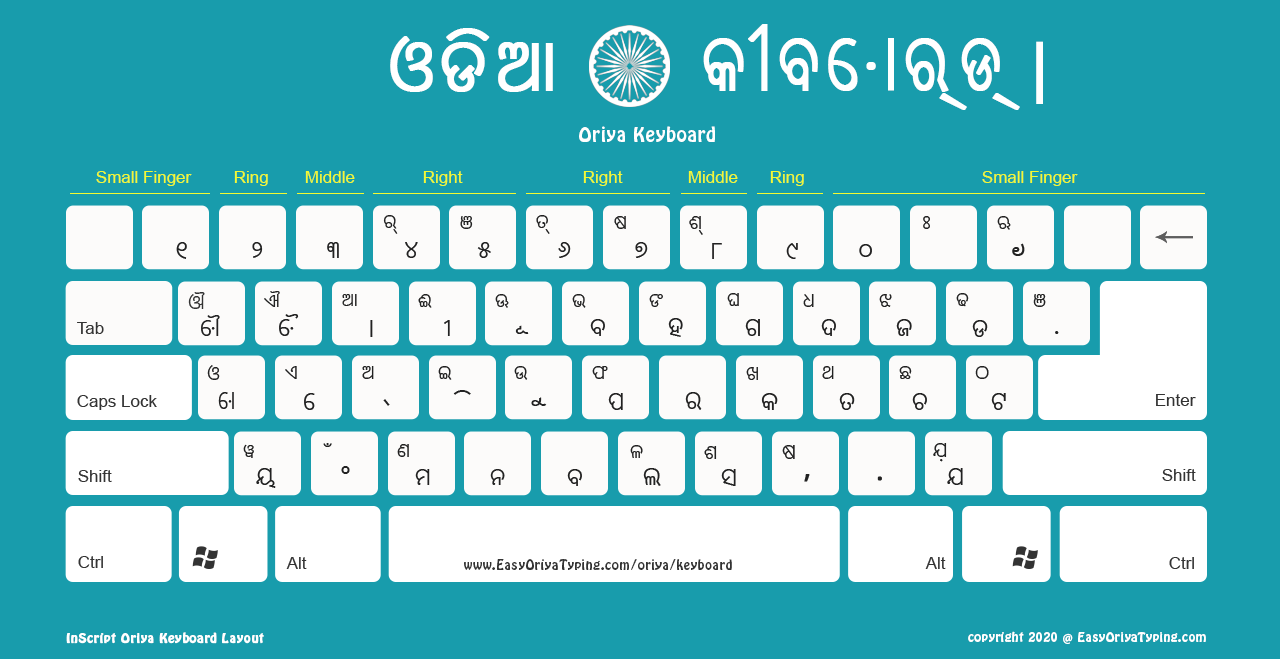
We have five different Oriya keyboard layouts for you to download on your computer. Once downloaded — you can use it as a reference to type in Oriya either on Word document or any other text editor. You also need to download the matching Oriya fonts.
High resolution image suitable for printing.
High resolution image suitable for printing.
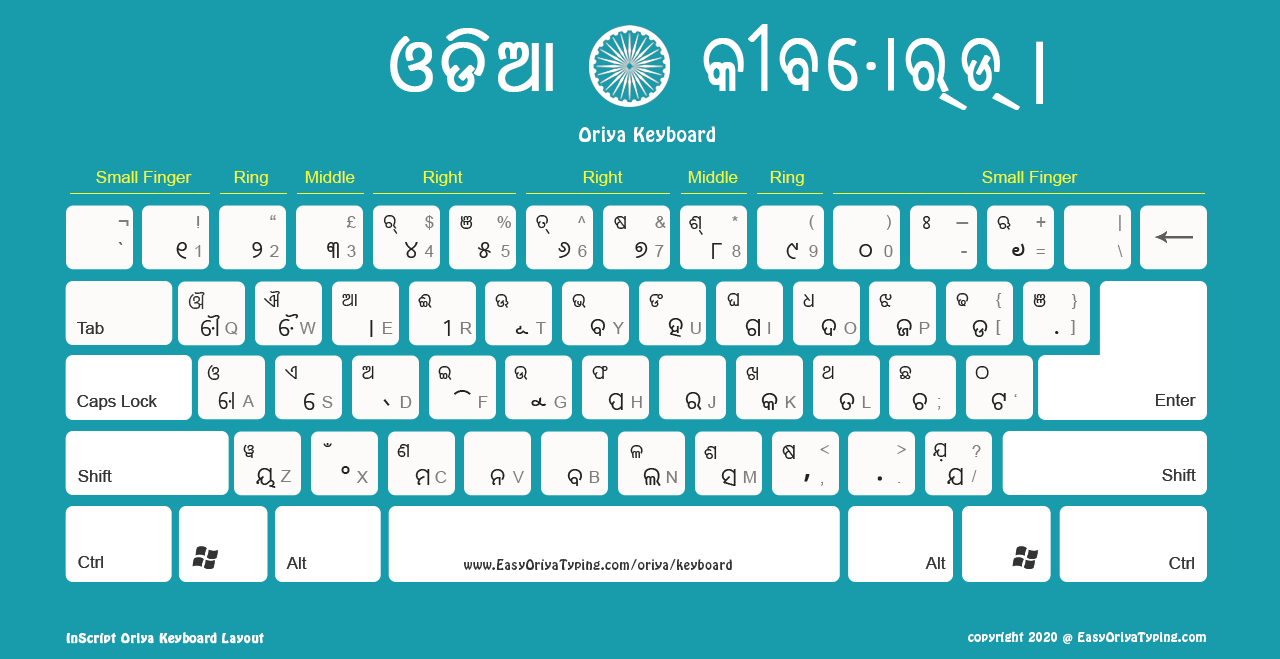
High resolution image suitable for printing.
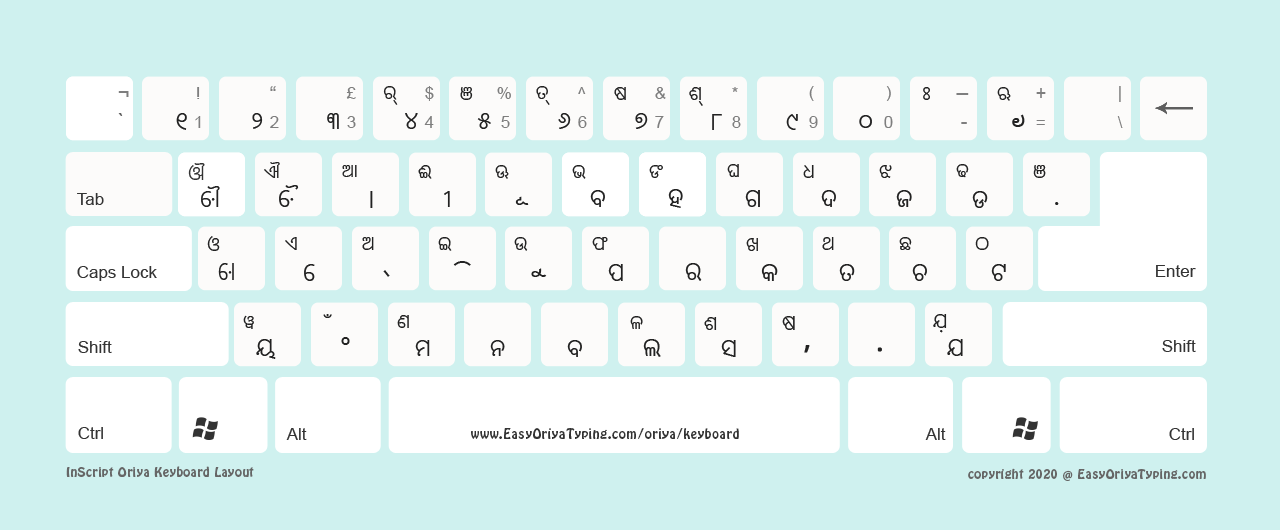
High resolution image suitable for printing.
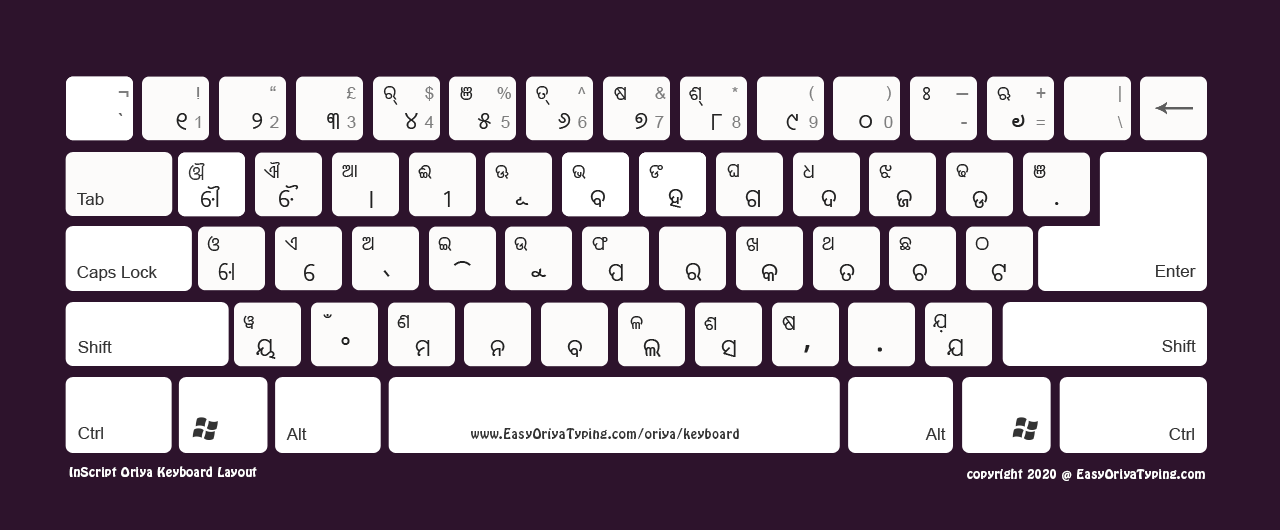
High resolution image suitable for printing.
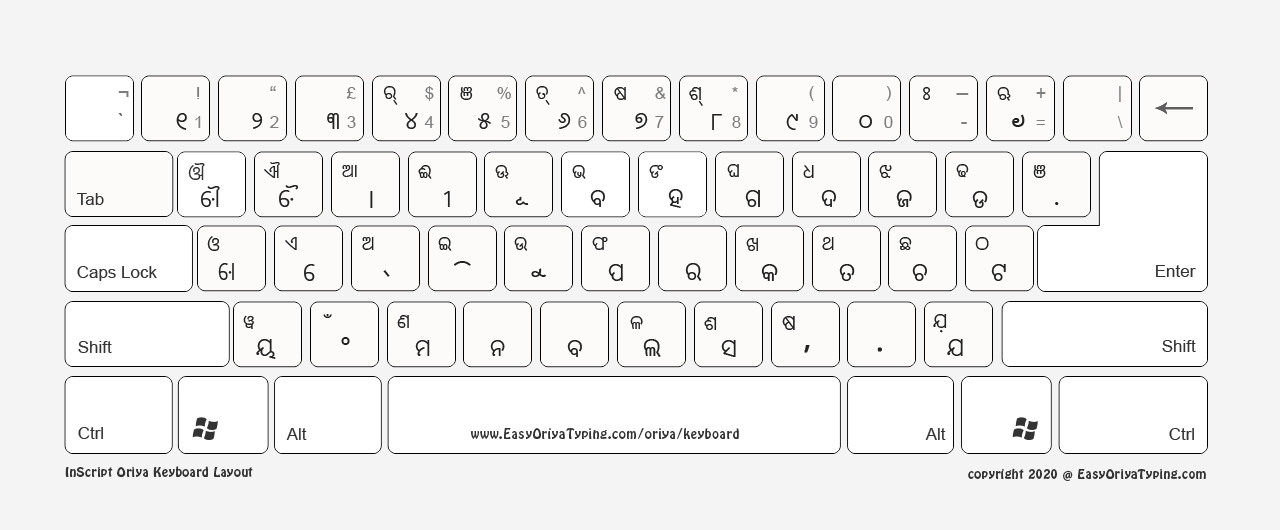
Getting started with Oriya typing is simple! Follow our step-by-step process.
Install Odia font — head over to our extensive fonts repository and install your preferred typeface.
Download your ideal keyboard image through this simple downloading process:
Browse and click on your preferred keyboard style
Right-click anywhere on the enlarged image
Choose "Save image as..." and pick your storage location
Prepare your writing space by launching your go-to text application and activating the Oriya font you installed in step one.
Begin your Oriya writing journey! Display your keyboard reference image alongside your text editor for seamless typing guidance.
Space-saving tip: Working on a compact setup? Our high-resolution keyboards deliver stunning print quality — create a physical reference that's always within reach!
Ensures traditional accuracy — each layout preserves authentic Oriya script conventions and cultural writing traditions.
Offers complete flexibility — choose from multiple styles and backgrounds to match your personal or professional preferences.
Includes unrestricted usage rights — download, print, share, and modify for any purpose without limitations or hidden costs.
This public link is valid for 7 days and shares a thread, including any personal information you added. This link or copies made by others cannot be deleted. If you share with third parties, their policies apply. Can’t copy the link right now. Try again later.
Toru Takemitsu stands as one of the most significant Japanese composers of the 20th century. His unique ability to fuse traditional Japanese aesthetics with Western classical avant-garde techniques created a completely distinct sonic landscape. While he is widely celebrated for his massive orchestral textures, innovative film scores, and avant-garde experimentation, his early piano work, Romance (1949), offers a rare, deeply intimate glimpse into his formative musical mind.
The piece is marked Adagio sostenuto, nobile e funebre , signaling a somber and elegant character.
In summary, while “Takemitsu Romance PDF” is a common search query, responsible musicians should seek a legal copy to support the composer’s legacy. The piece itself rewards patient study, offering a quiet, timeless beauty that epitomizes Takemitsu’s unique voice.
The piece was written during a time of significant personal and national upheaval. After World War II, Takemitsu initially rejected traditional Japanese music, associating it with the destruction of the war. His "awakening" to Western music came famously from hearing the French chanson "Parlez-moi d'amour" on a phonograph, which sparked his desire to compose in the Western style. takemitsu romance pdf
While many works are under copyright, you may find pedagogical analysis or public domain arrangements of his earlier, non-copyrighted musical fragments on sites like MuseScore.com .
You can also try checking out online archives or libraries that specialize in classical music, such as the Japanese Music Library or the Tokyo Music Library.
Are you looking at this from the perspective of the or the pianist ?
Romance represents one of Takemitsu’s earliest surviving works. It was composed during a period of intense experimentation and emotional vulnerability. Unlike his later, highly abstract avant-garde compositions, Romance bridges the gap between late-Romantic emotional expression and early modern harmonic language. It serves as a testament to his raw talent before he co-founded the Jikken Kōbō (Experimental Workshop) in 1951, which propelled him into the international avant-garde spotlight. Musical Analysis: Style, Structure, and Aesthetic This public link is valid for 7 days
The piece is built on a foundation of "pellucid chords and impressionistically 'blurred' harmonies". At its core is a Japanese minor pentatonic scale (C, D, E-flat, G, A), reminiscent of music for the traditional shakuhachi flute. Takemitsu builds his harmonies from this scale, often stacking notes in fourths ( quartal harmonies ), such as C-G-D-A-E♭ near the work's end. He creates tension by introducing small, dissonant clusters of semitones (e.g., D and E-flat), a nod to the influence of Debussy and Messiaen. At the same time, the piece is infused with "ancient Japanese scales," creating an "ethnic atmosphere" that would be less pronounced in his later, more abstract works.
If you are a student or faculty member at a music conservatory or university, you can often access physical scores or legal digital library databases (like Classical Scores Library) to study the piece. Conclusion
目前武满彻的《浪漫曲》主要是作为《 Piano Pieces for Children and Romance(こどものためのピアノ小品とロマンス) 》合集的一部分出版发行,出版社为Schott Japan。该曲集目录号为 SJ1123 ,共16页,除了这首《浪漫曲》外,还收录了《微风》、《云》等钢琴小品。
The dynamics are incredibly nuanced, ranging from a whispering pianissimo ( ) to passionate, swelling forte ( ) climaxes. 3. Rhythm and Meter Can’t copy the link right now
Composed in 1948 and revised in 1949, Romance was originally an etude written during Takemitsu's brief period of study with . It was dedicated to Kiyose and remained relatively obscure until after the composer's death in 1996, when a revised edition by British pianist Paul Crossley was published by Schott Music .
Musicologists largely agree today that while Takemitsu arranged the piece for publication, he likely did not compose it. The original is a simple, arpeggiated melody in E minor—technically a solo guitar etude rather than a complex composition.
If you prefer a digital PDF for your tablet or sheet music reader, check authorized digital sheet music retailers that partner directly with Schott Music:
 Sambhu Raj Singh ·